
Resin Bound vs Resin Bonded Driveways: Comparing the Difference
Table of Contents
What are Resin Bound and Resin Bonded Driveways?
How Much Do Resin Bound vs Resin Bonded Driveways Cost
Durability and Life Expectancy
Suitability of Resin Bound vs Resin Bonded Driveways
Resin Driveway
As professionals, we often encounter a myriad of questions about resin-bound and resin-bonded driveways. Businesses and homeowners want to ensure they’re making the right choice for their property, and understandably there can be some confusion between the two options. Despite their names being similar, they serve different purposes and have unique characteristics and benefits.
We are always here to provide clarity and guide our clients toward the best solutions for their specific needs. So to answer some of the most common questions we receive about resin surfacing, we have created this guide to help you learn more about the differences and make an informed decision if you’re looking to revamp your driveway.
What is a Resin Bound Driveway and a Resin Bonded Driveway?
As they are very similar terms, many confuse the difference between resin-bound and resin-bonded surfacing. This is understandable as they are both comprised of loose aggregate bonded together with a special resin. However, where they differ is in their installation process and characteristics.

Resin-bound driveway
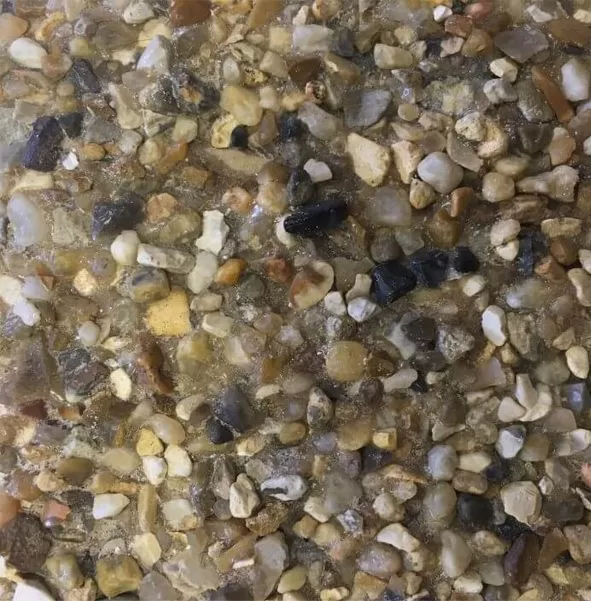
Resin-bonded driveway
What are resin-bound systems?
A resin-bound driveway is where the aggregate and resin are thoroughly mixed before being laid. This creates a smooth, permeable surface that allows water to drain into the sub-base, reducing the risk of flooding. It’s UV-resistant, durable, and available in a wide variety of colours.
What are resin-bonded systems?
Resin-bonded driveways involve applying a thin layer of resin onto the surface, followed then by scattering the loose aggregate on top. The result is a durable but non-permeable, textured gravel finish without the issue of wandering loose stones. This rough surface is particularly effective for providing grip, making it slip-resistant.
How Much Do Resin Bound vs Resin Bonded Driveways Cost
Resin-bound driveways, while initially more expensive due to their finish, may be more cost-effective in the long run because of their low maintenance needs. Conversely, resin-bonded driveways are cheaper to install but may require more frequent maintenance to prevent water damage over time.
Installation
The cost of both resin-bound and resin-bonded driveways can vary based on a range of factors including the size of the existing surface in the area, the type of aggregate used, and the complexity of the installation process.
Resin Driveway Cost
Resin-bound driveways are typically more expensive to install. This is due to the additional material and labour required to ensure a permeable and smooth finish.
On the other hand, resin-bonded driveways are usually cheaper to install as the process is less labour-intensive.
Maintenance
Both resin-bound and resin-bonded driveways are attractive options for those seeking low-maintenance surfaces. They require only occasional sweeping and power washing to maintain their appearance, making them an ideal choice for busy individuals.
However, resin-bound gravel has the added advantage of being weed-resistant and so reducing the need for ongoing maintenance compared to a resin-bonded surface.
While the resin-bonded driveway provides a slip-resistant surface, its impermeability could necessitate more frequent maintenance over time. Its inability to drain water can result in pooling during heavy rainfall, which can eventually lead to cracking. If these cracks are not promptly addressed, they could cause significant damage and increase maintenance costs.
So, although the initial outlay for a resin-bound driveway might be slightly higher, the potentially lower long-term maintenance costs could make it a more economical choice in the long run.
Durability and Life Expectancy
One of the major appeals that has made resin-bound and resin-bonded driveways so popular is their impressive durability. However, the life expectancy can vary depending on the quality of the installation and regular maintenance.
UV Stable Resin
A well-installed resin-bound driveway can last 15-20 years. Its natural water-draining system prevents any water puddling, and its UV resistance ensures the colour doesn’t fade over time.
Resin-bonded surfaces, while also durable, typically have a shorter lifespan of around 10-15 years, and the non-permeable surface could potentially lead to costly water damage in the future. However, its textured surface provides excellent grip, reducing wear and tear if used in a high-traffic area.
To best maintain your resin-bound/resin-bonded surfacing we recommend:
Regular Cleaning:
- Regular sweeping helps prevent any future issues by keeping the surface clean and clear of any debris
Jet Washing:
- A light pressure wash once or twice annually can keep the driveway looking fresh and clean. However, care should be taken not to use excessively high pressure, which could damage the surface.
Winter Maintenance:
- During winter, it’s essential to remove ice, frost, and snow from your driveway to prevent damage. Once temperatures rise above freezing, thoroughly wash the area to remove any traces of salt or grit used.
Suitability of Resin-Bound vs Resin-Bonded Driveways
Both resin-bound and resin-bonded driveways have their unique characteristics, making them suitable for different settings and requirements.
Resin Bound
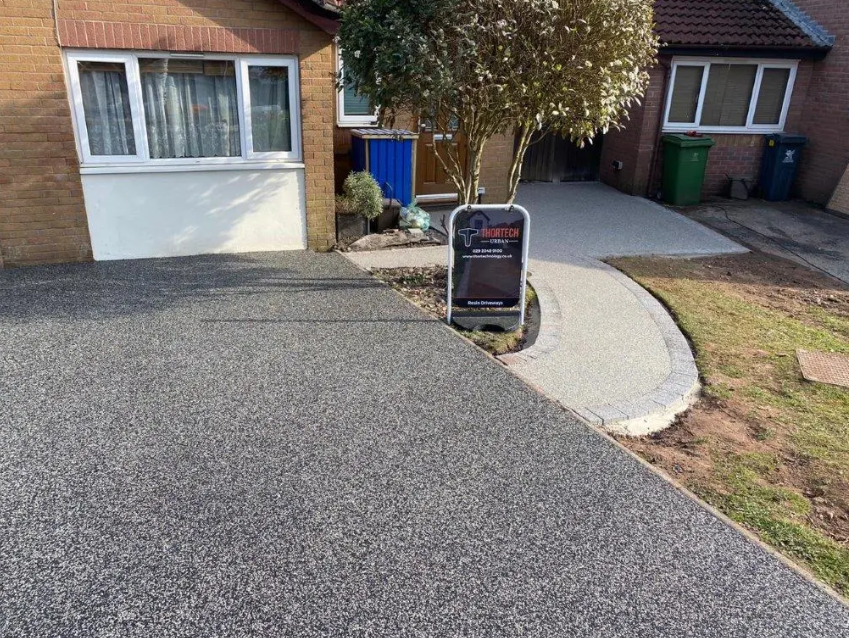
Permeable System
Resin-bound driveways are best suited for homeowners who are looking to prioritise aesthetics, durability, and sustainability. With a smooth, permeable surface that allows water to drain into the sub-base, these driveways are an excellent choice for properties in areas prone to heavy rainfall or light flooding.
Planning Permission
They are also a great option for larger driveways. UK planning permissions require driveways of more than five square metres to be made of porous materials making the non-permeable nature of resin-bonded driveways a less favourable option.
Additionally, with their wide range of colours and designs, they can enhance the curb appeal of any property.
Light Vehicle Traffic
However, they may not be suitable for areas with heavy traffic due to their relatively softer surface compared to other driveways.
Also, the higher installation cost can be a deterrent to those on a tighter budget.
Resin Bonded
Resin-bonded driveways are ideal for settings that require a high-grip surface. The loose stones create a textured finish making it perfect for sloped driveways or areas prone to ice and snow, as it reduces the risk of slippage.
Resin-bonded is also a good choice for smaller areas, walkways, or cycle paths, where the quick-setting nature can be a significant advantage.
However, a resin-bonded system may not be suitable for areas prone to standing water with no sufficient drainage system, as their non-permeable nature makes them more susceptible to damage over time.
Summary
| Resin-Bound Driveways | Resin-Bonded Driveways | |
| Appearance | Smooth finish with no loose stones | Rough, high-grip finish due to loose stones on top |
| Permeability | Permeable. Allows water to drain through, reducing surface water | Non-permeable. Water cannot drain through, potentially leading to pooling |
| Installation | Mixed with resin before being applied, creating a fully bonded surface | Stones are scattered onto a layer of resin, not all stones are fully bonded |
| Maintenance | Lower maintenance, generally just needs sweeping and occasional power washing | Higher maintenance due to the potential for loose stones and water damage. May require resealing or resurfacing |
| Cost | Generally more expensive due to the installation process | Less expensive installation process but potentially expensive maintenance costs |
| Life Expectancy | 15-20 years | 10-15 years |
| Suitability | Areas over 5 mᒾ | Slopped driveways or those under 5 mᒾ |
Overall, both resin-bound and resin-bonded driveways offer unique advantages and come with their own sets of challenges. The choice between the two often comes down to individual preferences, location-specific factors, and long-term maintenance considerations.
Resin-bound driveways, while having a higher initial cost, provide a permeable, weed-resistant surface with potentially lower long-term maintenance costs.
On the other hand, resin-bonded driveways are less expensive to install but may require more frequent maintenance due to their non-permeable nature.
Ultimately, understanding the distinctive properties of each type and assessing them against your specific requirements will help you make an informed decision that offers the best value over time.
If you are still unsure which type would be best for your specific needs, preferences, local climate and regulations, or are looking for a specific quote please feel free to get in touch by contacting us here.
